Welcome

I'd like to say thank you to everyone who has supported me on my journey to completing my first novel. To those of you who don't know me or my work and are visiting this page for the first time, welcome.

Over the next few weeks, I hope to share with you a little of my progress as I begin research on my new book -- a yet-to-be titled historical novel, set in the 1920s and involving the founding and establishment of The Brotherhood of Sleeping Car Porters, the predominently African-American labor union, led by A. Philip Randolph. Sleeping car porters worked on the railroads, cleaning and preparing sleeping cars and acting as valets and waiters for passengers. The union struggled for more than a decade before they received recognition and equity from the Pullman Company.

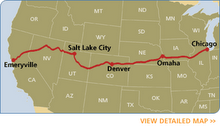
As part of my research, I'll be traveling by train from Oakland to New York City, following the path of those porters from years ago. This trip will include a visit to the A. Philip Randolph Museum in Chicago. Along the way, I'll be sharing with you what I learn and experience. Thank you for coming along.

Monday, March 23, 2015

Follow-up to #PitMad

I apologize for taking so long to follow-up on my last posting.

I wish that I could say that it was due to a deluge of interest but ... no.

I found about Pitch Madness through one of the many newsletters I subscribe to. I discover many great programs, workshops, residencies this way. Sometimes not for me, but for other creative friends. Anyway, I was excited. I thought I had a great pitch. My only concern was the timing.

Pitch Madness lasts from 8 a.m. to 8 p.m. EST. You can repeat your tweet twice every hour and hope that some literary agent who happens to be online will take notice, choose you as a favorite and invite you to query. But how to update that Twitter feed when you are a single mother, have an hour commute and you teach back-to-back classes? Hmmm...apparently, there's an app for that.

So I download this app, Hootsuite, which (in theory) should allow me to schedule tweets throughout the day. I spend all night scheduling the tweets to go live every thirty minutes. I even vary them slightly so that they won't get rejected. I'm thrilled that I figured this all out after my son went to sleep.

The next morning, I check my phone. Two tweets have posted on schedule around 8 a.m.  and 8: 30 a.m. EST and I have two favorites already. YES!

I can't investigate more. I'm off to work. In between classes, I try to discreetly check my progress. Nothing. Then I worry.

Is it my pitch? Is it my idea? Is this book dead before it reaches the light of day?

I check the Twitter feed. None of my scheduled tweets have posted. For some reason, I can't post from my phone and since I still have another class to teach, I don't have access to a computer for, at least, eighty-five minutes.

When I do get to a computer, I have only a few minutes to post before I'm off to pick up my son. I think about my favorites and console myself with the thought that it only takes one. That's all I need -- the one good agent who really cares.

Well, turns out, I didn't have two favorites. I only had one. The same person choose me twice. Well, great, she's enthusiastic.

Well, turns out, she wasn't an agent. She was an intern. But that makes sense, since agents are so busy.

Well, turns out, she didn't work for an agent. She works for a publisher -- who was looking for people to enter their writing contest.

So that was ... disappointing. My sister says that one day this will all make me laugh.

You know, it's been a while and it's still not funny.

I will say this. There were quite a few writers who got interest from agents, so it's legit. I checked out their websites. I think Pitch Madness is probably great for writers of children's books, anything from picture books to young adult. Most of the categories and the agents cater to a younger audience than I am seeking. Perhaps, it isn't right for me.

Doesn't look like there will be some magical happy ending or fairy godmothers helping me to find an agent at the moment.  Just some hard work and a thick skin.  Perhaps, one day, my sister hopes -- a sense of humor. 

Tuesday, March 10, 2015

#PitMad

So, this is unexpected. Fresh from the inbox -- Twitter is hosting a pitch-a-thon, of sorts. For about twenty-four hours, you can pitch your manuscript two times per hour for every completed manuscript while literary agents monitor the feed.  If interested, an agent will favorite the pitch, which is considered an invitation to query.

Here's my pitch:

Sons of Promise is a Civil War era ghost story about one family's legacy of sacrifice and silence as they try to define what it means to be free.

Tell me what you think.

Oh, and wish me luck. 

Monday, March 9, 2015

The Novel

Several years ago, I came across an interesting fact in a book called The Black Book -- slaves in Washington D.C. were emancipated in 1862, almost an entire year before slavery was abolished nationally. It stated that, at least, seven black men claimed compensation for a total of 28 slaves that they had owned. It was strange fact that stayed with me for a long time. 
As an undergrad at the University of California, Berkeley, I had the opportunity to participate in many long discussions about race and race relations. What has always interested me was not only how African-Americans relate to America but how they relate to each other; so my novel, Fruit of the Seed, examines the question, what are the bonds that keep a growing diverse community together. Fruit of the Seed is a historical novel about a family of free blacks who owned slaves at the beginning of the Civil War. It is the story of the ties that holds a family together --of history, of faith and of memories.
I am seeking representation for Fruit of the Seed; however, you will be able to preview excerpts sometime this year. I hope that you enjoy it.

Challenge Accepted

I'm mostly challenging myself -- to get a publisher within a year. The urgency has less to do with my ego than inertia and my own inability to "get my head out of my ass."

 I've been sitting this novel for over a decade now and haven't made single stride towards getting published. Due less to a lack of skill than commitment.I just haven't tried hard enough. I've been too scared, I suppose. Rejection. Criticism. You all know. The novel is as finished as its going to get. Time to get it out of my dusty drawers (The kind you open, not the kind you wear) and drop kick it into the world.

But today, I'm putting that all behind me. I'm going to document, as much of this as I can possibly stomach and see what happens. You can watch and cringe. I know I will.

Friday, January 4, 2013

Was named John Steinbeck Fellow for 2012/2013. Gave my first reading this past December. It can be viewed on the following link.
YouTubehttp://www.youtube.com/watch?v=BxgxC_w7Zhc.
Enjoy!

Sunday, July 18, 2010

Authenticity: The meaning of blackness

Au then tic i ty: [n] The quality or condition of being authentic, trustworthy, or genuine.

I’ve been thinking about authenticity a great deal lately. Perhaps it is a by-product of getting older; I am not so much impatient, as I am short on time. The older I get, I realize that I don’t have as much time for other people’s agendas because I’m trying to complete the items on my own bucket list. I want to make the difference clear because I could, if I wanted to, tolerate or indulge other people’s issues but I no longer have time to waste. Not if I am to do what I feel I was put on the planet to do. So instead of the usual equivocation, I’m going for the jugular - not out of malice, but out of necessity. I tell people what I think, how I feel and what I intend because it is expedient. How much time do we waste when we don’t tell the truth? And how much time passes while we get frustrated when our needs are not met? How much aggravation do we endure trying to discover the truth from one another, when a little honesty, up front is all that was needed? I can tell you, personally, that the difference in my life now and the way it was before is profound. The difference has been frightening and freeing because in coming to my own, I recognize that there are so many people who have not.


In my own life, I have had my authenticity called into question by my own family because I have a college education. How many of us have endured questioning the likes of a Congressional confirmation because our people suspected that education somehow changed us? We are forced to prove our authenticity by speaking Ebonics, sporting a dashiki or overpriced athletic shoes or watching an episode of Meet the Browns -- until we leave the family reunion and retreat to the privacy of our own homes, free to be ourselves. However, some of us, in the secret recesses of our consciousness are wondering ourselves – What does it mean to be black?

I ask myself – how should we define black (or any other) authenticity? Cornel West has written:

…blackness has no meaning outside of a system of race-conscious people and practices. After centuries of racist degradation, exploitation, and oppression in America, blackness means being minimally subject to white supremacist abuse and being part of a rich culture and community that has struggled against such abuse. All people with black skin and African phenotype are subject to potential white-supremacist abuse. Hence, all black Americans have some interest in resisting racism – even if their interest is confined solely to themselves as individuals rather than to larger black communities. Yet how this "interest is defined and how individuals and communities are understood vary. So any claim to black authenticity – beyond being the potential object of racist abuse and heir to a grand tradition of black struggle – is contingent on one’s political definition of black interest and one’s ethical understanding of how this interest relates to individuals and communities in and outside black America. In short, blackness is a political and ethical construct.

Blackness is a political and ethical construct. I understand this. Based upon our hundreds year history in these United States, people of African descent shared a social condition, which sought to control their individual and collective destiny. This social condition bound people of African descent regard of class, education and culture of origin. Then that condition seemingly disappeared. The mechanism of legal segregation and Jim Crow is dismantled and some members of a once united community begin to prosper. Without the social condition that once bound us together, what do we become? Who are we? What does it mean to be black now? I cannot disagree with Mr. West but blackness, not only, is a historical, political and social construct -- but also a cultural one.


Cul ture: [n] the sum total of ways of living built up by a group of human beings and transmitted from one generation to another.


But what about those of us who have defined not only identified it politically and ethically, but culturally? What if what I define as blackness has something do with a common history but also a common language, common habits, customs and worldview? The question then becomes what is or more specifically, which black culture? Urban, inner city? Rural south? Upper middle class? West Indian? West African? Which is more genuine? More black? Because all of these have a shared interest in eliminating racism but the cultures are different, aren't they? If that is the case, which is black?


Co opt: [v] To take or assume for one's own use; appropriate

ALSO To neutralize or win over (an independent minority, for example) through assimilation into an established group or culture


I’d like to believe that there is more that holds black people together than a common phenotype and a history of violently sustained racism and attempted genocide. I’d like to believe that what holds us together is deeper than that. Because the truth is, if that is all there is, then that really isn't enough to sustain us. We will continue to trivialize our history, allow others to define us and our identity will continue to co opted, regurgitated and sold back to us in bright shiny little packages by those who have no investment in either social justice or sustaining and nurturing our culture, however you may define it.

It is time to finally have a serious discussion about what it means to be black in America beyond the impact of racism. Understand that this in no way, means that we should abandon the fight against the institution of racism nor do I champion the argument in a post-racial society, the a discussion of race is no longer relevant What I am saying is that in our increasingly multi-racial, poly-lingual, it becomes increasingly important to understand who we are. As we live culture, we also create it. The continued creation of black should be deliberate, thoughtful, nurturing, not left to chance or in the hands of those with their own agendas. So what is it, people? Tell me, who are we?

Friday, July 17, 2009

San Francisco Writers Anthology


An excerpt from this novel-in-progress is published in the 2009 San Francisco Writers Conference Anthology. Available on both iUniverse and Amazon.

Check it out!

Thursday, July 16, 2009

T-shirts for a worthy cause

Hi, all. Below please find a link to a site selling t-shirts with a writing inspired message. The proceeds benefited a writer-friend of mine whose mother was a victim of a stroke. I hope you'll consider buying one. They are reasonably priced and go to a worthy cause.

http://www.cafepress.com/sequentialmerch http://marlasfriends.wordpress.com/


Thanks for your help.

Thursday, July 9, 2009

Kenyon Review Writers Workshop


I recently returned from the Kenyon Review Writers Workshop, which was a wonderful experience for me. The program included the nightly readings by both instructors and participants and it is now available for downloads. The link is below.

http://www.kenyonreview.org/workshops-ww-readings.php

Please follow the instructions on the page. You can listen to me reading on TUESDAY* night and during the OPEN MIC** night. I'd check out the instructors reading too because it was fabulous. Check out Nancy Zafris, Rebecca McClanahan and Lee Martin on the first night, if you have time.

*I'm on near the end. * *I'm up about fifth or sixth that night.
The podcast will be available until December and then go forever. I hope you enjoy listening to it.

Sunday, May 17, 2009

Recent publications

For a preview from my novel-in-progress, please check out University of LeVerne's Prism Review magazine.

For a excerpt from my first novel, Fruit of the Seed, please check out West Valley College's Voices magazine.

Saturday, January 17, 2009

Barrack Obama and the Return of the Responsible Intellectual

Thank you, God! I am so glad to finally be able to come out to hiding. For almost a decade, I have felt like an outcast, subject to humiliated and ridicule. I have disguised myself in conversations about reality television shows and relative merits of various celebrity pairings. If I pointed out that the portrayal of an Asian woman in the X-men felt, oh, slightly problematic because she had been made to look like a Chinese Dragon Lady, a dreaded figure from the 1930s; I was told I think too much. I took to hiding my books behind copies of People and US, just to fit in. Don't get me wrong, I love Project Runway as much as the next person does. I will pick up a tabloid in the checkout lane to see pictures of Halle Berry's baby because, let's face it, I'm nosy. But I do not and have not made the mistake of believing that it is really that important. I never made the mistake of believing that that should be the content of national discourse or that discourse itself is somehow threatening and sinister. It has always been slightly disturbing this way in which our national discourse has been reduced to babble about celebutantes and how we have begun to accept it. I have grown accustomed to the stupor induced by reading my student thesis. One of which argued that single people shouldn't be allowed to adopt because they are unlovable. If they were lovable, they'd be married. I teach college. I blame myself for adopting the language of the masses. You know what I'm saying though; whatever. And like and like and like and like. Doesn't bother anyone else that Are You Smarter Than A Fifth Grader is not just a game show but also apparently the only question used to vet the final Republican candidate for vice president of the United States? But that is all over. Finally, finally, the eggheads won and smart people can come out of hiding. Tired of saluting a commander in chief better suited to being president of a fraternity than president of the United States.

What is most striking about Barrack Obama is he is unapologetically intelligent and unabashedly articulate. He conjugates his verbs without shame, using words from an actual dictionary. In addition, he engages other people in discourse as if he weren't afraid of opinions other than his own as if the engagement of other in public and spirited discourse was a means to finding resolution rather than a way of highlighting difference or a threat to his entire belief system. Shocking. This week, the President-elect broke bread with what is considered the conservative brain trust. A move that is unprecedented. He is engaged in dialog with 'the enemy,' rather than shutting his door and assuming that the only answers to the enormous problems that face our country will only come from the left. He has said publicly that this will be an administration that embraces science; yet Obama has also come to reestablish America, as a moral leader, as well.

Discourse, spirited engaged rigorous discourse is fundamental to a thriving democracy. Refusing to speak to an network, interviewer or another person because their opinion may be different than your own or because you are afraid of being asked difficult questions is cowardice. Intellectual in-breeding that leads to defective thinking, strangulation of ideas and reasoning. I mean if our only criteria for our political leaders is that they are like us, what will we get, overweight, debt-laden morally irresponsible good old boys and gals who we can pal around with? I don't want a president I can have a beer with, I want my president to be the smartest guy or gal in the room. Let's talk about what you get when you put an intellectual in office, someone who thinks before he acts but what's more important, let's see what happens when we have an engaged and informed electorate who knows what they believe and more importantly why they believe it so that when someone tries to strip them of their civil liberties, denies them their civil rights they know exactly what it is that they are losing and when they decide to go to war, they know what they are dying for.

It seems to me that we all have a unique opportunity to get re-acquainted with our government, to do more than simply having an opinion but a chance for us to think AND to participate. But calling on Americans to serve their country on MLK Day, President-elect Obama is reminding us that being intelligent is not enough. It isn't enough to simply sit in ivory tower or coffee shops and criticize others for their actions, that it is time that we take actions, ourselves. Certainly, now the time for rhetoric is over. The time for action is now.

Monday, January 12, 2009

To Andrew Lewis (young man arrested and speaking on the 6 o'clock news)

On Wednesday, I listened to sirens as they drove past my home, wail after wail throughout the night. Earlier, I heard the whisking blades of helicopters as they raced from airport pad to downtown. I went out into the chilly night, hands deep in my pockets and watched as they circled, like vultures over downtown. At the time, I had no idea of the destruction taking place there. I didn't have to turn on the news, though, to know that there was pain and rage released there. Oakland is a city, where passions seem to run high, whether for the Raiders or young men killed before their time. When I drive downtown these days, I see the boarded windows of businesses and broken glass still strewn in the gutters. Business owners, their customers, folks just trying to live shaking their heads in confusion and frustration at both the authorities who need to be held accountable and those who think their violence is justice. Fear and anger hang over the city like fog every morning since New Year's Day, but it isn't burned off in trash bins set afire or dispelled by shattered windshields. It hangs over us, clouding our vision. I think, Andrew, that it has clouded yours.

"It was for a cause. I feel like I have to fight for him."

I, too, was shocked and horrified by violent murder of Oscar Grant. I am tired of young black men being targeted by police. I am angry that again and again black life seems to worthless in the eyes of the people charged with protecting us. Maybe I'm worried, too because I am not as shocked as I could be and because I am becoming too accustomed to violence being meted out against young black men, not just by the police, but also by other black men. Violence has become too commonplace in Oakland. Right now, even as I type, yet another siren wails by my building. The herald of more violence taking place somewhere in this city. I'm tired. Tired of the news, the hopelessness, meaningless and the lack of love that lies beneath each act of violence.
We must fight for Oscar Grant and every man like him. We must fight for safer streets and we hold accountable everyone, everyone who takes the life of a young black man. But how do we fight, Andrew?

"I know they wasn't part of but somebody has to pay."

While I am tired of the unjustifiable homicides, I'm also tired of you, Andrew and your undirected rage and your inflated self-righteousness being unleashed on innocent by-standers. Oscar Grant's death does NOT give you the right to unleash your rage on anybody unfortunate to be in your path. Acts and times such as these, demand that we respond, not react. A response demands and expects accountability and justice. A reaction is a reflex, thoughtless and reckless. A reaction is a display of force; a response is a display of discipline. A response would have been about Oscar Grant, his life and his death. Reaction, such as the one you made, was about you.
Seems to me that if we are fighting we need to know what we are fighting for, what it is we are seeking to achieve – a show of force, a mere grand display of our collective anger and grief might be gratifying in the short-term but it is ultimately empty and impotent, the equivalent of a temper tantrum. What about the man who pulled the trigger and the institution that trained him that black lives have no value? Who will ensure that they pay? Not you, Andrew, when your attention is focused on burning trash bins and breaking windows at McDonalds. While the cameras are trained on you, or the store owners whose businesses were damaged and the police officers who arrested you, while all of that is happening, where is Oscar Grant? The man who pulled the trigger slips away into the shadows. The authorities who tried to cover it up cover their tracks. Customers on the BART system are afraid of you, not the authorities who conspired to keep the truth from them. Justice for Oscar Grant slips away as this becomes more and more about the riots and the police response to the riots and less and less about what happened January 1st at the Fruitvale BART.

"You can replace a car. That man can't get his life back."

Oscar Grant was murdered on New Year's Day, not maliciously, but seemingly casually, as absently as pouring salt on slug. You watched the video. He was lying on his back. He was being subdued, knees in his back. You, are holding him down, if you simply let your rage dictate your response.
You want to fight for the Oscar Grant, Andrew? Make this more about him and less about you. You want justice or do you just want to fight? Because there is a difference. HOLD BART accountable. HOLD the officer responsible accountable. Boycott BART every Friday until this man and every person who tried to cover it up is behind bars. You can't give Oscar Grant his life back but you can get justice for him. That is how you fight.

Wednesday, November 12, 2008

Why Would Anyone Want to This Job

Frankly, I've never understood why anyone would want to be president. It seems a tireless and thankless job. Over the years of my life, as I have observed men who left the White House looking far older than when they arrived, I wondered why they did it. For years after their presidencies are over, the relative merits of their governing skills, their intelligence, their character and this illusive thing called legacy is debated over and over. Often by those without either the vision or wisdom to do so, ranking presidents on some top 10 list, as if we can quantify greatness.

Our more recent presidents have allowed themselves to be seduced into this thinking. They begin talking about their legacies as soon as they enter office, recording every moment, hoarding every piece of paper, writing diaries in anticipation of books to be written and libraries to be built after they leave office. I've never had much time for people who were more concerned with how they would be perceived than what they could accomplish. I don't see how we can ever have an effective leader if he (or she) is making decisions based upon how his actions will be perceived in a future history book than how effective his actions are in the present. That's not leadership; that's an audition. Right now, it seems to me that we need a leader far more concerned with our present problems than with his legacy.

Leadership is really not about a leader or at least, it shouldn't be. Leadership should be about service. It appears counter-intuitive but the role of the leader is of both domination and submission. We elect our leaders because we assume that he will make decisions that are in our best interest but we do not relinquish our role in the decision-making. We are not children to be lead but partners in the process. The role of a leader is noble one and, more so, in this country because it is a choice. One does lead but only, with the permission of those to be led. The leader chooses to lead and the populace chooses the leader. That is the essence of democracy. Those that forget that do so, to the detriment of us all. I bring this up only because it appears, at times, that we, all, have forgotten our roles and responsibilities. We elect leaders, assign them the role of messiahs and wait for the miracles to happen. The leaders, in the void of our attention, become less and less concerned with our well-being and more concerned with their legacies.

I don't believe in messiahs or miracles in politics. I believe in democracy,though not with the fevor of some because I am aware of its imperfections. It is, I think, a work in progress. Being a part of it is a tireless and thankless job. But it has occurred to me that while there may not be messiahs, but there might be superstars, those people that just through the force of their will and talent stand above the rest. Those folks, the ones that would want to be president now, while we are facing the largest economic crisis ever, are in engaged in two wars and have strained relations with our allies, would have to be one of those people. This would have to be a person, like Micheal Jordan, who wants the ball when it is the last game of the championship series and the team is down by one with time ticking off the clock. They want the ball, yes, because of the moment but also because they have the courage to take the shot, all with sweaty palms, the roar of the crowds, and hands-in-your-face defense and the pressure of your fans, family and teammates watching. Because they can see past it, to the basket and the victory afterward.

Sometimes they make the shot; sometimes they don't. I say, give them the ball and see what they can do.

Sunday, November 9, 2008

Charles Johnson and the Literature of Victimhood

It was with great interest that I read Charles Johnson's essay entitled "The End of the Black American Narrative" which was published recently in The American Scholar. In his essay, Johnson argues that the black narrative must begin to focus on "stories grounded in the present, leaving behind the painful history of slavery and its consequences." Johnson labels the body of works written by African Americans as the "story of group victimization" in which the antagonist is always racism and the protagonist is always black. This story, Johnson writes, became archaic in 1963, with the March on Washington and passage of the Voting Rights Act in 1965. Since that time, Johnson says that we have held onto to images of ourselves as victims that is no longer relevant and, in fact, is ahistorical. Johnson further states that black people today are "complex multifaceted people who defy easy categorization" and that what is called for is a literature that "captures...a fraction of our rich diversity" and that is based upon "the unexplored present...understanding that each is...a provisional reading of reality... that must be tested everyday in the depths of our own experience."

On many levels, that isn't such a bad idea. I agree with Johnson, the complexity and diversity of African American life is one that it often overlooked and quite possibly denied. I recall, before the election of Barrack Obama, black publications, such as Ebony, having written articles which questioned whether or not Obama could or should be called African American! I hope they are ashamed of it now but it does illustrate a point that Johnson makes about the way in which the definition of who is and what it takes to be black has often been constricted to this one particular ancestral history. I only raise this point because I think we need to be aware that there are multiple histories of the African presence in America. This isn't intended to diminish the history or the legacy of slavery in any way; only to point out that the African American identity is as plural as the languages Africans spoke when they reached this shore, regardless of the century in which they reached it. When we ignore that, we actually handicap our ability to understand our shared problems and our shared destiny.

I also think back on my years in college when so many upper and middle class black students felt that in order to be authentically black that they had to embrace a image that was the antithesis of themselves, which as Cornell West points out "highlight histories of black abuse and black struggle." To illustrate this, in one my classes, I reminded my students of the climatic scene in the movie, 8 Mile, in which Rabbit, played by white rapper Eminem outs his opponent by telling the predominantly black crowd that his real name is Clarence, attends private school and has two parents! Clarence stands dumbfounded at apparently being found out and Rabbit wins the competition. So I asked my class, what is wrong with having two parents and attending private school (or being named Clarence). Nothing, except that the underlying assumption is that those experiences makes one privileged and those privileges are outside of the black experience; therefore, those who have had those experiences (i.e. growing up in a two-parent family, attending private schools, etc.) are not black or not black enough.

I point this out only to demonstrate that it has been a assumption,(I would argue with Charles Johnson, that it is relatively new, say the past twenty years or so) that limits black identity to one experience. All others have been largely ignored or belittled, as either atypical or unimportant since the vast majority of black people did not share those same experiences.(Remember those who wouldn't watch The Cosby Show because they didn't believe a black family with a lawyer and a doctor was real. It seems, to me, important that we, at least, allow ourselves the luxury of believing that it could be.) I, like Johnson, find this problematic because it limits our vision of who we are and what we can dream possible for ourselves. Vision and imagination is nurtured, I believe, not just by an understanding of what was but also what is and what is possible. So, yes, it is important that we begin to write a literature that "captures our diversity."

But I take issue with anyone telling another artist what they must or must not write. An artist should only be subject to the dictates of her own conscience. Further, I take strong issue with the characterization of African American literature as one of group victimization, one in which one's destiny is based on color. The literature that I read, that nurtured me and articulated my own history, was not about victimization; it was about identity, human relationships, alienation, and the American Dream. The first three are themes in literature of all people. The last unique to those of us living here in the United States. It seems to me to label African American literature as of victimhood betrays Johnson's own myopia. Racism was the context, not the story.The story was and always will be who are we and what are we doing here. Those questions do not occur in a vacuum; they occur in the context of a particular history, whether your grandfather was brought here in a slave ship hundreds of years ago or flew here in a plane, with a ticket paid for by a grandmother from the islands, some thirty years ago.

I also take issue with the assumption that only way we can create a literature that is diverse is by ignoring the legacy of slavery and racism. (No doubt I must now confess my own bias, since I am not only a African American woman, whose own family history is rooted in the legacy of slavery but also because my own interest as a writer always cause me to look back). I do believe that, as the adage goes, that those who do not learn from there history is destined to repeat it. I also believe that our understanding of the present is made possible by our understanding of the past. The past is always relevant, not just collectively but individually.

Slavery and its consequences is always on the table, even in the 21st century. Johnson writes that "at this moment Senator Barrack Obama holds us in suspense with the possibility that he may be selected as the Democratic Party's first biracial, black American candidate for president..." and concludes that, that historic milestone, along with the successes of a myriad of blacks in entertainment, politics, and industry means that "black Americans don't have social problems and cultural problems in 2008." Really? Their success has not guaranteed that black men and women are paid the same wages for the same job. It has not removed the glass ceiling that many middle and upper class blacks find themselves fighting against daily. The triumph of Barrack Obama is meaningful, in part, because of slavery, and its consequence of Jim Crow, lynching, segregation, and institutional racism. Thousands of people -- black, white, Latino, Asian -- cried, yes, because Barrack Obama is a charismatic and dynamic political figure but also because they understood history. The moment was great because of the moments, great and small, horrific and triumphant that came before it. It provided the context for his victory.

Johnson is right when he writes:
A good story always has a meaning(and sometimes layers of meaning); it also has an epistemological mission: namely, to show us something. It is an effort to make the best sense we can of human experience and I believe that we base our lives, actions, and judgments as often on the stories we tell ourselves about ourselves (even if they are less empirically sound or verifiable) as we do on severe rigor of reasons.
Stories do have meaning and they do show us something. They do help us to make sense of our lives. I ask how can we do so without the an examination of what lead us to the present? Our understanding of the past is not fixed, either. Even our understanding of the past has to be changed and revised in view of our changing future. There are still stories there that are relevant to our present and our future.

Please note that I am not arguing against stories that are set in the present or that deal with our changing identity and our changing history. To the contrary, I am in favor of it. It was when I was watching CNN, a few nights before the election and I heard one of the commentators remark that Obama's election would signal a change in consciousness for many Black Americans (I would argue all Americans, but...) who believed that white Americans would never vote for a black man. It is the change in consciousness, I think, that Johnson is asking us to reach for in the new African American narrative, one that embraces the complexity of a changing America. However, wholesale dismissal of the past is shortsighted and dangerous. It is only through embracing our past and a willingness to re-examine it, re-interpret, if necessary, as well as documenting our present can we create a body of literature that is reflective of our experience.

Change I Need

It is Sunday, November 9, 2008, five days after the most important historical event of my lifetime and I feel irrevocably changed. It is not simply that an African American man had been elected president, which many of us dreamed of but could not have imagined, nor is it that the country seems to have finally, after almost a decade, chosen hope over fear and light over darkness. It is I, questioning the changes I need to make to be a part of the new world I see being born.

Most of my own life, if I were to be honest, I have been aware of my reluctance to assume leadership in any endeavor of which I have been a part. No doubt that I have feared failure, but sometimes because of lack of interest, sometimes because of doubts about my own abilities but mostly, there has been a reluctance to be the center of attention. Alone in the spotlight is not a position that has ever appealed to me and to a degree, I had accepted that I would always be an observer of history rather than a creator of it. I wonder if that choice has left me an excuse to remain mired in mediocrity rather than reaching for greatness. I am afraid now that it has done something far worse which is that it has been an excuse to remain silent when I need to speak up. Ironic for a writer.

I excused myself because it was (and still is) that as a teacher, writer and artist I believed that it was important that I allow others the space to think for themselves. As a teacher, particularly, I am aware of the power I hold over my students. As an individual, I am aware of my own personal power (one I have been reluctant to own or even acknowledge) which awes and often silences others. I have never been interested in domination, only cooperation but has that caused me to be silent when I should be speaking up? What price have I paid for peace? Have I allowed ignorance and prejudice to fester because I have to reluctant to confront it? It is tact or cowardice?

Suddenly, I am questioning the image that I have had of myself and I want to see myself differently. Not because a black man is president but because I finally feel a part of a world bigger than myself. I have a stake in it and I have a power to shape it into a world that I believe in and in looking at pictures of people, like myself, from all over the world, I realize that I am not alone in wishing for, hoping for a world that is far different than the one in which we now live. The world, for me, has already changed.

Tuesday, August 19, 2008

New York State of Mind


My first day in New York it rained -- a steady drizzle that lasted all day. Just as well...I had finally gotten my copy of that last of Harry Potter and intended to read it all day (and night). Nothing is better than reading a book on a rainy day. Besides I like the sound of cars driving through standing water and the soft humid air.
I am happy that there are still books for young people to get lost in, just as I did when I was young and my mother took my sister and me to the library. I remember losing all track of time in the school library when I was in fifth grade. We had moved across the country and my only friends were books then. Besides I needed a break from my own mind, my thoughts, my stories, decisions, potential decisions, everything unfiltered, unfocused, undecided. My story is still taking shape. I can leave it behind for a little while.
For the remainder of the week, I'd spend time at the Schomberg, marking time on the subway and walking the streets of Harlem. Still deciding on the setting of the novel -- Chicago or New York. I still had time to decide.

Sunday, January 27, 2008

Arriving in New York

I spend most of the next day and evening looking out on a rainy landscape. The rain falls in steady consistency that is comforting. I sit in my little roomette. A part of me lamenting leaving Chicago, another part excited about New York and yet another part of me, thinking ahead, knowing that this is the last destination. In just a few days, I'll be going home, armed with more information than I know what to do with yet and knowing I need more, I'll need more and I don't even know what I'll need. I think I should have planned to stay in Chicago longer. What use is New York to me now? But do I really want to change the setting of the novel? Is this really the direction to which I want to move? I don't know. I don't have to decide now, do I? I am still gestating. New York. My stay in New York will tell me all that I need to know.

The train ride is longer. It seems that we stop at far more major cities than I had on either the Oakland-Denver or Denver/Chicago legs: Indianapolis, Cincinnati, D.C., Baltimore, Philadelphia. I'm slightly nostalgic for open spaces, although the rain slows the cities down, quiets them, so I can take them in without feeling overwhelmed. Unfamiliar skylines are revealed and train stations, regardless of their location, feel more and more familiar to me. They are similar, not necessarily in style or architecture but in feeling. They've aged. They know they aren't the center of attention of anymore, yet, they are undeterred and determined to make themselves useful, no matter where they are, in the center of or on the outskirts of town, connected or separated from the other more modern versions of themselves. I remember that here in these cities is where we live and contrary to what the media would have us believe, life, vital and valuable, does take place in the space between Los Angeles and New York City.

We are over an hour late when I finally reach New York. The late hour and the remnants of the storm makes for a silent departure. Passengers disembark in silence, walking together but isolated towards the outside world. Grand Penn Station seems to be ensconced in scaffolding and mesh draping. As we finally find our way to the taxi stand, drizzle is falling softly around me. New York City greets me indifferently, as if the entire city has much better things to do than acknowledge my arrival (which, of course, it does). Cars drive by, cutting a path through puddles of water. People walk by, mostly as if I am invisible. The bright neon lights from Madison Square Garden seems rude and gaudy, overly large and self-important. Lights are everywhere, artificially extending daylight or competing with it; I'm not sure which. Finally, its my turn; I'm in a cab and making my way to Brooklyn, where I'll be staying.

Sunday, October 28, 2007

To New York


My uncle drops me off at Union Station and its back to the dungeons for me. (Why are all train stations in major metropolitan areas named Union Station?) It takes me a while to navigate the twisting bowels of the train station, which I realize is now a Frankensteinian labyrinth of the older train tracks, the Metra and the city's older system. Unlike the architecture above ground, this is an uneasy design of old and new. The new is glistening modern, like an underground mall, while the old is cold marble, with towering columns and intricately carved ceilings, a hiccup in time where hobos still slept on wooden benches waiting for a free ride to somewhere more prosperous. These changes are abrupt, patched together so that I walk from one setting to the next, like a time machine.

Luckily for me, Amtrak has a lounge available where I wait, eat what remains of my Chicago-style pizza, call my sister and watch the conclusion of Flight Plan, with Jodi Foster and I wonder if it’s the train company's not-so subtle way of discouraging air travel. When I finally board the Cardinal for New York, its evening and the dank yellowing lights are even less illuminating than when I arrived. I've reached that funny place that we all reach when we travel, when you know that the end is coming soon. Like reaching a certain age and you realize while there is a great deal of the journey left but more is behind you than ahead of you.

I've enjoyed train travel much more than I thought I would. I think a little about what I will write about Chicago one day and about when I will return. Mostly I hope I will do justice to this city and its people. I had this idea in my head and now it’s been erased and I have to, in some ways, start again. It’s okay because I haven't really started yet and this is what the trip was for -- discovery.

We pull out of the city into the countryside. The sights become less urban soon and grayer and darker. It starts to rain. Dribbling raindrops on the window of my roomette and far-off flashes of lightning punctuate the thunder. It’s been a long time since I've seen storms like this one. Always liked the sound of raindrops on windows, it easily puts me to sleep.

Sunday, October 21, 2007

Winding Down the Windy City


My last day in Chicago and I realize that I will miss it. I get up early; though, I still feel disappointed in myself and my feet still hurt, I want to be out and walking the streets and I love cities, like New York and San Francisco, that seemed to be made for walking. I've always loved the early mornings because its the time when you believe that all those things you plan to do are really going to get done and before you realize you were just kidding yourself. I check out and scout out the location of Garrett's for some caramel-cheese popcorn I had promised myself I'd send to my friends in Colorado.

I walk into the bookstore I had passed the night before, which had the air of frat house on Sunday morning. I expected to see an emptied keg, discarded shoes and other debris lying across the bookshelves, instead it was the remnants of streamers, posters, balloons and candy wrappers being picked up by clerks who dragged themselves about as if recovering from a hangover. Three young girls, mostly identically, sat in a row at the counter of the coffee shop; their auburn heads bent at 45 degree angle, eyes downturned towards the latest addition of Harry Potter. I nodded. How could I forget?

I need a little time to myself. I have a date scheduled with my uncles -- uncles I don't know very well. Uncles, I don't know very well, at all. They are my father's half-brothers, born after my grandfather (a man I knew not at all) and my grandmother split up. They had grown up in Chicago, away from my father and his brothers and had only discovered each other after my grandfather's death. This was no deliberate subterfuge on anyone's part, just the result of distance, income and resentment, I think.
I am surprised when I see them later to see how much they resemble my father and my uncles, (the ones I grew up with) -- not just in looks -- (short statures, light almond colored skin and dark hair with a tendency to curl, if they still had it) but in manner: the way they laughed (which they did loudly and from their bellies) the way they spoke (with the same cadences and gestures) and what they spoke about(politics and race). The experience of sitting with them, of talking with them is like being in a house of mirrors, seeing distorted and skewed images of the familiar. I see my father in them and my uncles, but also my cousins, my sister and me and I realize that I was really seeing my grandfather. I wondered about my grandfather, a man I had only seen twice in my life and how much of him was in me. I try to lift those traits we have in common and create a picture of him, this man I never knew, except through my father's and my uncles' stories. So I asked them about him. Their answers, I think, were vague and unsatisfactory, as if they were protecting him or me. Or maybe, because they don't know him either. Maybe it is too intimate a question.

I find myself changing the subject and asking about Chicago. What was it like to grow up there? How has it changed? How is it different or special? Their answers don't surprise. They are proud of the city, proud of its history but frustrated by its racism and politics. As I listened to them argue, first with each other and then with me about various topics-- Harold Washington, economics, immigration, Oprah -- I realized that my story is here. The novel that I intend to write needed to be set in this city. It’s hard to say why but life does happen between the right and the left coasts, one even I failed to fully appreciate and I think I should know better. There was a history here that I need to know and part of it is my own.

My uncles escorted me around various parts of Chicago, including their Walk of Fame and the tomb of Stephen A. Douglass, president of the Confederacy. (Yes, honey, THAT Confederacy!) It was over quickly and I had another train to catch but I could leave Chicago, with a sense of satisfaction, knowing that I was coming back.

Sunday, October 14, 2007

Getting Home Blues (for Betty)


Getting back to the hotel took up the rest of the day. My feet were swollen; I was hungry, hurting in body and spirit. When I returned to my room, I simply put my feet up and my head down. The trip wasn't quite over yet, but I was leaving the next night on the train for New York without getting what I came for; so, for all intents and purposes, it might as well be.

A friend of my sister's, who lives in Chicago, came by and showed me around the city. Her parents grew up here. We drove, not around the Magnificent Mile, but to Bronzeville into neighborhoods where redevelopment was taking place. My tour guide pointed out the changes being made in the various neighborhoods and how gentrification was pricing out even middle-class people, like her. Chicago, again, reminded me of St. Louis, where I was born and my parents were born -- crumbling stone buildings, next to empty overgrown lots and trees dying without grace or growing without attention. Some of these now had been bought and remodeled. Stripped of stonework and wrought-iron, some looked embarrassed, as if they realized they were being made over into something that they were not. In-between, new growth, new buildings, some mimicking their older neighbors, like awkward younger siblings. Their lack of wisdom and experience was painfully obvious. Other times, buildings were restored, as close as they could be to their original appearance and then I could see the neighborhoods that became home to hundreds of black folks, escaping the oppression of southern racism.

We stopped to attend the gallery opening of a friend of a friend, Rosalind McGary at the Steelelife Gallery. The gallery is on the second floor in a small loft-like setting -- wood floors and exposed brick, much like you would expect from a artist-owned space. Rosalind's work is tremendously detailed and meditative. Their power seems to be in their ability to convey both movement and stillness simultaneously. In looking at them, I find my restlessness and my frustration waning. From a distance, her work is deceptively simple, just an interplay of texture and lines; even the mediums upon which she chooses to paint, wood mostly, add these layers of texture and depth. Then you step up to them and you see that in some of these paintings, these patterns have been created by the tiniest dot of paint, each one painstakingly placed to create this mosaic effect. So when you step up to it, the effect is three-dimensional, as if this image is floating off the surface and reaching out to you. The ethereal becomes real. I was a little stunned, both by the effect and the work that I realized went into each piece. I asked Rosalind how long it took her to do one of those paintings. She told me, "I try not to think about it. Depending on the piece, a year or more." Suddenly, I felt a little ashamed of myself. My little setback was nothing compared to the time and commitment she had made to a single painting, even the commitment to her vision of her work. Surely it would be easier to do it another way, but she doesn't.

That is the way it is with all things I think. The BSCP spent ten years, a decade, working to get recognized as a union and that seems like such a long time, when giving up seems so much easier and sometimes, it seems sensible and responsible. That's how treacherous our minds can be. When our lives tells us that our commitment to the truth is an indulgence, a luxury that we can't afford and we believe it, we lose.

Now I was never going to give up but I often wonder why I bother, especially when the rewards seems so out-of-reach. The writing I do, because it requires research, because it is a novel, occurs in a vacuum. I am alone there, in the world created in my own head and though I'd like to invite people in, I can't. Not yet. Its too fragile. I'm the guide and I don't know my way. Yet.

I am really reminded of this when later, after some famous Chicago-style pizza, we pass a bookstore, full of people, streaming out the door with their excitement spilling into the street. Harry Potter and the Deadly Hallows will be released at midnight. Say what you will about commercialism, but that woman spent over a year on public assistance (British version), writing in a cafe, stretching out her cups of coffee and writing her story. Her setbacks, far greater than mine, and the list of reasons to stop far longer than the list to go on. She didn't.

DailyLit: What I'm Reading Now

Copyright

© 2008 L. Rebecca Harris