Welcome

I'd like to say thank you to everyone who has supported me on my journey to completing my first novel. To those of you who don't know me or my work and are visiting this page for the first time, welcome.

Over the next few weeks, I hope to share with you a little of my progress as I begin research on my new book -- a yet-to-be titled historical novel, set in the 1920s and involving the founding and establishment of The Brotherhood of Sleeping Car Porters, the predominently African-American labor union, led by A. Philip Randolph. Sleeping car porters worked on the railroads, cleaning and preparing sleeping cars and acting as valets and waiters for passengers. The union struggled for more than a decade before they received recognition and equity from the Pullman Company.

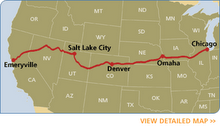
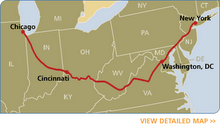
As part of my research, I'll be traveling by train from Oakland to New York City, following the path of those porters from years ago. This trip will include a visit to the A. Philip Randolph Museum in Chicago. Along the way, I'll be sharing with you what I learn and experience. Thank you for coming along.

Wednesday, August 15, 2007

Explaining the Blues


(Explaining the Blues – Ma Rainey) Before I even began my trip a number of things were running through my mind -- typical for a writer who is still gestating a novel to digest and regurgitate ideas and images endlessly to see what they are made of. On that platform, for the next hour, the only thing I had to chew on was my own thoughts. I listened to and thought about the blues.

In Blues People, Leroy Jones (aka Amiri Baraka) writes that
the blues, had, and still has, a certain weight in the psyches of its inventor;
and when writing about Richard Wright’s Black Boy, Ralph Ellison wrote that
the specific folk-art form which helped shape the writer’s attitude towards his life …and embodied…quality and tone of his autobiography was the Negro blues,
but, in truth, the blues are all black folks’ autobiography.

I mean, I’m not saying anything new when I say that the blues are the definitive American music and that jazz and rock have their blues in their blood. So when I downloaded or recorded over 200 songs, blues and jazz, I did so because I wanted a soundtrack that was older than my own. The soundtrack of my life features The Jackson Five, Marvin Gaye, Minnie Ripperton, Hall and Oates, Earth, Wind & Fire, Stevie Wonder, Chaka Khan with Rufus, Cameo, Prince, and (remodeled) Michael Jackson, ad nauseum. These days, it’s more about Miles than I care to admit but, in my mind, the soundtrack of this trip included Ma Rainey, Bessie Smith, Memphis Millie and a whole list of anonymous singers, guitar, banjo and piano players who had travelled by train or by car from the South to the cities of New York, Chicago, St. Louis, Oakland, Los Angeles. The stories of the folks I want to write about, the stories of what they left and what they found were in those songs. It seemed to me if I was retracing their steps, as best as I could, I should do so with those same stories in my ears. (Counting the Blues – Ma Rainey)

Ralph Ellison also wrote that
the blues is an impulse to keep the painful details and episodes of a brutal experience alive in one’s aching consciousness, to finger its jagged grain, and to transcend it, not by the consolation of philosophy but by squeezing from it a near-tragic, near-comic lyricism.
In my African American literature course, I discuss with my students a literary concept called a blues ethos or blues aesthetic, which is a way of looking at the world that is grounded in the black experience – or the way black folks look at the world -- and how that way of looking at the world, permeates much more than music. The best example of that that I can think of is watching Richard Pryor’s performance in Live on the Sunset Strip. When the man talks about setting himself on fire and you want to laugh and cry at the same time, that is the blues, creating art of pain.

(Non-sequitar – This is precisely what most of these comedians who admired Richard Pryor don’t understand – the ability to make the autobiographical experience into a universal one, to explore its pathos and its absurdity and all their complexity rather than targeting the easy laugh. They lack either the life experience or the emotionally maturity ~Copyrighting the n-word, chile please~ to create blues and therefore, genius.)

Also embodied in that blues ethos is an ability to recognize irony and embrace contradiction. The story of Pullman porters is just like that. Somehow, in that car, they were both master and servant and their survival depended upon understanding that. The irony of being, in many ways, the one of the best professions available and still being paid far less than your peers, subject to random acts of humiliation and pettiness, yet signifying all that is elegant and civilized, is innate to this story and unfortunately not uncommon.

Leroy Jones also wrote …
that the weight of the blues for the slave…differs radically the weight of that same music in the psyches of most contemporary Negroes.
Jones concludes that
the one peculiar referent to the drastic change in the Negro from slavery to “citizenship” was his music.
Music marks the period in which the African ceases to be African and becomes an American – that you are no longer going home and that; indeed, there is no home to go to. Recognizing that this place, crazy as it is, IS your home and your destiny lies with it --- Honey, that would have given me the blues, too.

(Non-sequitar – Viewed this way doesn’t it seem disturbingly like an abusive relationship? Just a thought.)

Blues aren’t entirely about politics of, for that matter, tragedy. In the blues is the possibility, the hope of (if not the actuality) of triumph, redemption. So it was with my journey, when I finally get downtown. (Downtown Blues – Frank Stokes)

Monday, August 6, 2007

Chicago Blues Shuffle, p. 3


(Whatta You Gonna Do? – Louis Armstrong) How could I screw this up? I planned this entire trip just to get here. How did I miss this? Why didn’t I call? Because I had been checking the website.

Now I was certain that this was a mistake. Obviously, the heat and the lack of food had diminished my hearing, so I called back (If anyone is recalling what my dad said about insanity, just shut up). I get the same message. I don’t know whether I should cry or bitch but since I am facing certain dehydration, I elect bitch.

So I called my friend – in New York because I figured she was at home, at a computer and maybe a sympathetic ear. Thankfully, she answers the phone. She patiently listens to me wail the blues. I ask her to check the website because maybe I made a mistake. I thought I knew the dates when the museum was open. I feel some vindication when she tells me that nowhere on the site does it mention that the museum will be closed; (she even called) however, this small comfort was doused when she asked why I didn’t call. (Don’t Explain – Billie Holiday)

Pick a reason -- I assumed (erroneously) that the website information was current. I lived out-of-state and I was cheap. A telephone call seemed obsessive. I’m shy. (Arrgh) Regardless, I was still hoping that I could salvage this excursion. I was going to go to the museum anyway. (Look, I still had to get back to the Metra station.) With any luck, (though I don’t know why I’d begin to have any now) someone might be around. I could leave a note and maybe get a contact as a result. Also note that the entire time that this exchange is taking place, I haven’t stopped walking. I still don’t see anything remotely looking like Maryland Avenue, so I give my girl the number of the nearest address and she uses MapQuest to get directions. She tells me that I have over a mile to go to get there.

I was hungry, hurting and lost. Worse, I needed to go to the bathroom. (Baby, Please Don’t Go – Big Joe Williams) I pass the Gwendolyn Brooks Academy and though I was in too much pain to rejoice in signs, I’m glad to see it.(Gwendolyn Brooks Academy is also the former site of the public school built by George Pullman in 1915.)

I first read Gwendolyn Brooks at U.C. Berkeley in a class with the great Barbara Christian as my professor – a course that introduced me to many other writers. Most of my life, I knew very little about black writers, less about black women writers. I suppose the first inkling I had had was when The Color Purple (the movie) generated so much controversy. I read The Bluest Eye for the first time as a senior in high school. My parents had taken me to see A Soldier’s Play, I suppose, when I was in junior high. After all of those experiences, I lay awake in my bed, replaying words and scenes in my head, feeling kinship to these characters, maybe more than the authors. Their lives, maybe their interior lives more than their surroundings, echoed mine more than the cartoony images I saw on television. They were complex and contradictory, the way I knew myself to be, yet felt wasn’t allowed.

(Nobody’s Blues but Mine – Bessie Smith) Most of my adult life I spent doubting my ability to create stories that combine emotional honesty and art, simply because I was afraid to fail. Completing my first novel was a triumph over the fear that dogs me. I also know I’ll face those fears all over again as I create this novel. This wild excursion might be a metaphor for that creative process. Don’t we always begin with enthusiasm and a plan and find ourselves sidetracked and taking unexpected detours, always struggling to get back to that original vision… or maybe it’s just me.

I had finally gotten to the Metra Station and turned onto Cottage Grove. I’m at 111th and I have to get to 104th. I was almost there. I pass this construction site, unidentified but I feel certain that it must be the former site of the Pullman factory, being torn down for development. There are no signs, indicating what it was or what it will become. Even looking at the maps, it is difficult to identify the specific building I was passing. Only a few more blocks, my feet were swollen and I was dehydrated, I distracted myself by looking at the housing, I’m sure George Pullman built. How would he feel -- seeing black folks in the utopian community he tried to build and watching the empire he built being slowly dismantled until all that is left is the name he gave it? (Lord, if that would only happen to Donald Trump. Kidding…I’m kidding, sort of).

After a few blocks, I approach the building and my minute hopes sink when I see an empty parking lot. The building three stories tall, surrounded by a high wrought iron fence, looks empty and lonely. The windows, though, uncovered are darkened. I can’t even get close enough to peek through a window or slip my card under the door or in a mailbox slot. Or go to the bathroom. I take pictures. It’s all I can do.
It’s been almost four hours since I left the hotel. Over a week since I left California and it appears that I’ll return to both empty-handed. I leave after only a few minutes and begin the pilgrimage back to the station, trying not to think about my feet and trying not to feel humiliated. (This Bitter Earth – Dinah Washington)

It would take me another hour to get back. The 111th/Pullman station was a local, so several trains passed by without stopping. The station, itself, had neither agent nor bathroom. Mostly it was a shack and a platform. From there, I had a panoramic view of the world that was and is Pullman, re-inventing itself. It crossed my mind to walk to the 115th, where I began but my feet couldn’t take it, so mostly I sat, listening to my iPod and contemplating the blues.


Friday, August 3, 2007

Chicago Blues Shuffle, p. 2

I apologize for the delay. Here's Part Two of the Chicago Blues Shuffle and you might need this, see link below...

(What a Difference a Day Makes – Dinah Washington) The next morning I woke, ready to get started. I figured if I timed everything correctly, I could hit two museums – The Pullman Porter Museum and the DuSable Museum of African American History. I knew that I have quite a way to travel and since I had planned on using public transportation of some kind, I just had to organize everything well.
One of my contacts was working and we weren’t meeting until evening but she gave me a general idea of where to begin. I went straight to the concierge, who was helpful, providing me with a map, directions to the nearest Metra station and informing me I had less than fifteen minutes to make my train.

It’s still a beautiful weather, cooler than the Chicago I anticipated. I wore a sleeveless dress and some sandals. I thought about purchasing a cheap jacket or sweater at some nearby store but I didn’t have time to stop for breakfast if I was going to catch the train. When I get to the station, which I found easily enough, I discovered that finding my way is a little more challenging; platforms and in-bound and out-bound trains are not identified. I spoke with the only agent I would see the entire day and she directed to the right platform and instructed me to board the third train that came by. This was a little different than what I had told by the concierge but I didn’t think anything of it. (Hobo, Don’t you Ride this Train- Louis Armstrong)

On the Metra, conductor comes by and punches holes in your ticket which I thought was quaint and old-fashioned, like something I had once seen in a black and white movie. The ride, itself, took me away from downtown and I saw the parts of Chicago I had also heard about – crumbling, abandoned houses with boarded windows and vacant lots -- evidence that if there was an economic recovery, it hasn’t reached everywhere.

The train sped past several stops, which didn’t disturb me until I saw my stop (111th/Pullman) fly by. Before I could protest, we were stopping at the next station, some five blocks away from Pullman, where the concierge directed me to go. But it’s five blocks, no big deal, right? (Traveling Light- Billie Holiday) I figured that the street I was looking for probably crossed the street I was on. I’d walk up and cross over. Now the map I had wasn’t detailed enough to provide the streets of the neighborhood I was in. It indicated the district but little else. The concierge had told me that I’d need to get specific directions from the agent but there was no agent at the station. So I asked a young girl walking by me on the street to point me in the direction of Maryland Street.

She told me it would be easier to reach by bus but I had no change or small bills, so I decided to walk until I found a store; besides, I like walking. (Strut That Thing – Cripple Clarence Lofton) I liked the neighborhood, which reminded me of the houses that surrounded the cul-de-sac where my grandparents lived in St. Louis. Small framed houses of brick with little porches, where people sit and stare at folks walking by (in this case, me) fronted by crumbling, gutted sidewalks. I’m not in Bronzeville, where I understand most of the Chicago Porters lived. I’m just outside of Pullman, where George Pullman created housing for his employees who built the Pullman cars. This housing was intended for his white employees only. The black porters, who epitomized the Pullman standard of luxury and glamour, had to make do elsewhere. (He’s a Son of the South – Louis Armstrong)

Of course, that was then and this is now. Black folks were everywhere. Few spoke to me. Some clearly wondered who I was and what I was doing but said very little.

(Well, that isn’t strictly true. A man missing his front teeth and wearing a Black History Month t-shirt asked, “What your name is?” Later, a van, pulled alongside me, with one young man behind the wheel and another hiding behind a curtain in the back, The man behind the curtain told me, “I shore had some pretty feet.” A compliment, I might add I was kind of grateful for since I had done my own pedicure.)

I had been walking for several blocks and still hadn’t seen Maryland. The major intersection I found was Michigan Avenue and that was a slight tickling in the back of my mind which I ignored. I assumed that the streets named after states had to be close to one another, so I just kept walking. After all, both the concierge and the young woman who gave me directions told me I’d have to walk a little ways to get there. (Some Day You’ll Be Sorry – Louis Armstrong) But, of course, the state named streets disappeared and I’m suddenly wondering how a sister can get lost going in the straight line.

Non- sequitar -- If that ain’t a metaphor for life, I don’t know what is. Sigh, subject for another day.

I have to admit that I’m a little fascinated and awed. Somewhere along the way, I pass Alex Haley School and I feel a little bolstered, as if the sighting of the great writer is a sign I’m on the right track. But by this time, I’m passing the third major intersection and there are no more streets named after states, presidents, colleges or major bodies of water. I’m lost. I’m hungry. My feet hurt. While it isn’t the oppressively humid Chicago I’d heard about, it’s still hot. I’d crossing over Halsted when I finally ask someone where Maryland is. Never heard of it.

Never heard of it? Ain’t this YOUR town? Don’t you live here?

I kept these hostile thoughts to myself and ask the next two people I walked by the same with the same results. To avoid seizure, I compose myself and remember something my dad once told me about insanity – doing the same thing over and over again and expecting a different result.

Non-sequitar – I suppose that also is a metaphor for life. Sigh

So I decided to backtrack, go back to Halstead and walk over to 111th Street and maybe by walking back down 111th, I’ll find Maryland. It was only four blocks and I didn’t come all this quit now. By then, I’ve been out walking almost an hour. I skipped breakfast and my patience decreased at rate greater than the rate my hunger increased. Why didn’t I stop and get some food? Because while I may not be able to understand directions, I do understand myself. The instance, my butt hit a chair, I wasn’t getting up again. Just not going to happen
.
When I finally get to 111th Street, I no longer trust myself, train attendants, concierges or strangers on the street. I decided I needed help. I call information to get the number to the museum (yeah, remember I was trying to find the museum). Soon, I’m connected and I hear the following message: Thank you for calling the A. Phillip Randolph Pullman Porter Museum. The museum will closed until July 26th. Then that nice telephone lady says that the mailbox has been closed. (I Been Mistreated and I Don’t Like it – Bessie Smith)

(to be continued)

Tuesday, July 24, 2007

Chicago Blues Shuffle

Well, the story of my visit to Chicago is like a classic blues tune, full of high hopes, disappointment and eventual redemption. Since I had filled my iPod with music by Bessie Smith, Ma Rainey, Billie Holiday, Duke Ellington and Louis Armstrong, (for reasons I’ll explain later) I decided that it would be fitting if this particular entry had a soundtrack. So, ladies and gentlemen, the Chicago Blues Shuffle.

(Note: I tend towards hyperbole when I’m frustrated and impatient. These might not have been the actual songs that I was listening to, at the exact moment that these events took place but they should have been. Press the play button on the sidebar for the appropriate track to accompany the narrative.)


It started off like any other great romance, with promise and excitement. We crossed the Mississippi around noon.(I got the Feeling I’m Fallin – Dinah Washington)I didn’t eat lunch on the train because I wanted to be ready to sample the fare of Chicago – deep dish pizza, caramel-cheese popcorn, hoagies. I had a few contacts and hoped that I’d be able to jump right into the city life. I had my bags packed and was waiting for the train to finally pull into Union Station.

Already the scenes outside my window had begun to change as we began to get closer and closer to Chicago. After miles of natural beauty from California, rugged mountaintops and canyons in Colorado, we had been riding past fields and fields of corn in Nebraska and Iowa. Tiny little train depots that had consisted of a single story shingled or brick buildings were pretty indistiughable from one another. As Chicago grew closer, the depots we passed still held that small town charm but instead aging farmhouses, shops and single family houses filled out the background. More and more people began to fill the shrinking spaces between buildings and sidewalks grew beneath their feet. Blue signs with the names, like Westmont, La Grange and Berwyn began to dot our tracks and underneath these names, Chicago in white letters accompanied by an arrow pointing straight ahead. Because of the position of my room on the last car of the train, I didn’t see the city until we turned east into downtown and then it slipped from my view as the train went underground.

When the train stopped, it didn’t matter to me that the air smelled like diesel fuel or that this platform looked like the set from the type of movie that I’m scared to watch by myself or that the old yellowing lights overhead made it difficult to make out much more than the other passengers disembarking from the train and the various freight and passenger cars lined along the platform. I was finally in Chicago. I had no idea how to get to the surface. I just followed the people in front of me, trusting that they weren’t leading me into some subway train hijacked by bio-terrorists or a rodent mutated by the chemicals dumped in sewer. The underground station is confusing but I keep dragging my suitcase towards the daylight.

When I finally emerged, I was met by sunlight and the skyline of Chicago. (This is Heaven to Me – Billie Holiday) Even from the sidewalk I could see the Sears Tower. The evening was cool and the breeze slightly passive. The cabbie told that I had missed the heatwave of the previous few days. Though my hotel was only six blocks away, I was impressed by the originality and variety of the architecture that I saw. My hotel was across the street from Grant Park, which I couldn’t wait to explore.

After I checked in, I called all the various contacts I had been given and no one answered, so I decided to go out on my own. I left with no specific destination in mind since I still didn’t quite know where I was relative to the sights of the city. (Its Magic – Carmen McCray) I head west, away from the Park and run right into the Chicago Public Library named after former Mayor Harold Washington – a building I think is magnificent – the perfect balance of traditional and modern. Staring at the gigantic copper gargoyles with their outstretched wings perch above the more traditional red brick facade of the building, I almost walked into on-coming traffic.
I found I was only blocks away from DuPaul University’s downtown campus and their theater, as well as the Art Institute of Chicago. There is lot of construction going and I can hear music coming from the Park and I smelled food so I head in that direction.

After asking around I find out that the city hosts an event called Chicago SummerDance , which offers live music, dancing and dancing lessons in the park. Each week, on Thursday, Friday and Saturday, a different dance is featured. This week, it was the samba. The area cleared for dance had a nice size crowd but the band was taking a break so I decided to take advantage of the sunlight before it disappeared to take pictures. I decide to keep walking straight ahead because I can begin to make out boat ahead of me and as I do, I cross over railroad tracks and I wonder if these are the ones I had just ridden. As I head toward Buckingham Fountain, I looked back at the skyline, which rivals New York and San Francisco’s. I thought I’m going to like it here.(Summertime – Ella Fitzgerald)
The park is magical, reminding me more of Paris than New York, particularly the crushed granite, flower beds, iron benches and whimsical sculptures. As I approached the water, I realized that I missed California a little; although, the lake looks a lot more appealing than the Bay, at least on this day.The water was azure. (I know. I don’t use that word but it wasn’t blue; it was azure). Boats were bobbing quietly and a group of tourists rolled by on Sedways. (What’s up with that?) I walked along the shore and enjoy the day coming to a close and looking forward to the next day.

(To be continued...)

Monday, July 23, 2007

Colorado and the Black West


I am now leaving the state of Colorado and it was far more beautiful than I thought it would be. I hope to come back and take this ride again in the winter when the snow covers the canyon walls. My photography might even be improving. (Maybe not…) The train pulls in, just behind Coors Stadium so close you could catch foul balls, to downtown Denver, which is active and attractive with restaurants and lofts, popping up like pimples.


(Non-sequitar: We rode by building with a sign that read Coorstech. I just want to know -- are these the people that invented the can that tells you when the beer is cold because, seriously, if you can’t tell that the beer is cold, you don’t need to be drinking).

I think I can say that about the little I’ve seen of the Denver/Boulder area. It appears to have remained close to its roots. I visited a couple of cities, Boulder, Denver and a little town called Niwot. I appreciate the character of these cities that don’t seem to be interested in imitating the west or east coast.

I don’t know how you feel but I miss the distinct geographic character that distinguished the various regions of this country. I mean that architecture of the past was defined by necessity and convenience. Builders used the natural resources that were available and built homes to accommodate both the climate and the culture of those areas, so you get houses of stone and mortar with vast fireplaces and mudrooms in one area and frame and wood houses with wrought iron railings, high ceiling with woven reed fans in the center in others. You could tell where you were just by looking at the buildings.

Today, easy access to resources and shipping plus capitalism means replication, so the homes in Arizona aren’t that much different than homes in California or Missouri, which I guess is a good thing (though I can’t think why). Around every corner is the same set of stores (large affordable retail store – insert, Kohl’s, Target, Wal-Mart, next to a multiplex – insert sequel or remake of mediocre television show here, next to bank, next to chain restaurant, insert Claim Jumper, Mimi’s Café, Olive Garden, etc. here) I ain’t gonna lie; I like shopping. I contribute to the gross national product as much as the next person (seriously, maybe more) but wouldn’t it be nice to actually go somewhere that felt different, looked different, that reflected its roots. Isn’t part of the attractiveness of a place like New Orleans is the beautiful Spanish colonial homes or the row houses in Boston? I know, I know -- the plumbing and the closet space leaves a lot to be desired but can’t we update without turning every block into McDevelopment? My point is that they seem to be aware of that here. The homes I’ve had the pleasure of seeing and passing are new and still maintain the character that I think defines this west – the cragginess and solidity of the Rockies that surround it and it was a pleasure to see.

The people are probably some of the nicest I have ever encountered as a traveller. I don’t mean friends of friends, ( who were also nice and generous in spirit, as well) I mean complete strangers who went out of their way to be helpful and friendly, like the gentlemen who had just disembarked the train and saw me struggling up the ramp with my streamer trunk sized suitcase and offered his help. He walked with my suitcase all the way back to the platform and presented me to the attendent. I have no idea where he needed to go but he went out of his way for me. Several people at a convenience store outside of Denver assisted my friend and me when we lost our way. When the clerk couldn’t interpret the Yahoo directions we had gotten any better than we could, she got the manager to call the museum to get the directions. People just don’t do that.

Speaking of museums, I visited the Colorado Black West Museum. (Tip: Don’t trust Yahoo directions. It’s not hard to find but the directions are unnecessarily complicated. Call for directions or take the light rail which stops across the street). It’s housed in a small house in the Five Points area of Denver, well maintained, containing photographs, and memorabilia of black settlers, cowboys and prominent black citizens of Colorado’s past. Exhibits also highlight the Buffalo Soldiers, Tuskegee Airmen and the Bill Pickett Rodeo which still tours the country. Shay, the curator, provides a history of the building itself and the museum’s founders. (I won’t spoil it by telling you.) He is friendly and man with locks twisted around the top of his head and several piercings. Growing up in a predominantly white nieghborhood, when he played cowboys-and-Indians, he was always the Indian because cowboys were white. Coming to Colorado was a revelation for him and he shares his enthusiastic discovery with the public. (Ask him about his dogs, Biggie, Bebe, Baby and Lil’ Kim.)

I didn’t find out much about the porters there. I didn’t expect to and I didn’t mind. I see that some of what I learned might be useful and I imagine it being incorporated into the novel somehow. I might use some of this as inspiration for another novel. Several novels have already been written about blacks who came to settle the West and created all-black townships – Paradise by Toni Morrison,, as well as, Black Wallstreet, but there’s always room for one more.

(Non-sequitar – I wonder why “Deadwood Dick,” who I believe visited Rev. Al Sharpton’s hairdresser, was never featured in the series, now canceled by HBO. Hmmmm…)

The night ride was filled with storms. There was little thunder I could hear over the noise of the rails, but I could see the lightning over the fields and rain crisscrossed my window. I fell asleep, glad that I was inside.

Monday, July 16, 2007

What am I Hoping to Learn?

I don’t know what I need to know yet. Well, that’s not exactly true. I want to learn what I can’t learn from a book. Researching a time you never lived in and then trying to recreate it in fiction is an imprecise endeavor because you can know all the facts and still not understand the time. A reader will know that you don’t know. It’s not about slathering a lot of historic details into the narrative just to show off; it’s the re-creation, to the best of your imagination, of a time.

What I can learn from books is the facts, the tasks, the expectations, and the problems of their daily work life. From the oral histories and the documentaries, I can learn their voice, cadences, jargon, as well as what made them laugh. But what about the bonds they formed? What about the feel of the rails beneath their feet? What about seeing the Pacific Ocean for the first time or the Rockies from the foot of Glenwood Canyon as I am right now? What about being just one generation out of slavery?

So far, I’ve read a few oral accounts of these men and all but one enjoyed his life as a porter, in spite of the racism; it was more than the money. There had to be something else that kept them out here and sustained them while they were miles away from their families. What was that?

I want to understand this character. I know a few things about him. (What I do know, I’m keeping to myself for now). I don’t know yet where he was born or how he became a porter or where he lives, Chicago or New York. Research has always helped me to answer these questions and lead to other more interesting questions. Research on the BSCP leads me to labor movements and other political movements, like the anti-lynching campaigns, desegregation of the military. What about jazz and art? How can I approach anything happening with black folks in the 1920s without looking at the Harlem Renaissance?

I have read Zora Neal Hurston’s Colored Me and Alain Locke’s The New Negro and other Harlem Renaissance writers and they are so optimistic, it seems naïve to me. But what do I know? I am one generation after the Civil Rights Movement, the Black Power Movement, assassinations and political scandals. I am cynical. How do I recreate that hope and confidence? Where the hell did it come from? They didn’t know; they had no idea the battle it would take and the whole time, they knew that they had right on their side.

I don’t have their faith, so a part of me doesn’t understand it. I want to. Maybe I really need to. How will this all of this come together? I have no idea. I'm not sure how I did it before, but that I did once allows me to believe that I will again.

Saturday, July 14, 2007

Leaving


I left for Oakland’s Jack London Station at about 5:30 in the morning. As I rode to the station, I surprised to see that one or two more new condominium developments had been completed. I ride by this area on the freeway probably daily and yet the developments keep popping up before I realize – a sign of economic development or gentrification, depending upon how much money one has in one’s savings account or even if one has a saving account. The area which had once housed warehouses and storage facilities is now home to upscale lofts and soon-to-be upscale restaurants and stores. (When I ride through Alameda County, I will see that this is a theme, but more on that later.)

I arrived at the station about 30 minutes before departure and the evidence of early morning was still apparent. It was quiet and the fog still clung to the hills of Oakland and Berkeley behind me. In front of me, beyond the street and the newly developed luxury apartments was the estuary. Already a few boats were headed to the bay. The estuary shimmered and I felt cool enough in a sweater which was proof that it was going to be a beautiful day. I took pictures of the exterior and interior of the station, a building of glass and brick with graceful arches and a bronze statue of C.L. Dellums in front. Dellums was a regional vice-president of the BSCP and uncle of the city’s mayor, former Congressman Ron Dellums.

When I purchased my ticket from this station a few weeks ago, I knew that it was right that I start here. I knew when I saw the statue. It gave my trip a sense of symmetry and history.

The platform held only a few passengers, one couple and three of four people riding solo like me. No one spoke which is just as well. I hate people who like to talk in the morning and I was slowly and sadly acknowledging that I am a rotten photographer.


Freight trains rolled by tattooed with graffiti and I wonder if one day an archeologist will be able to identify where these cars traveled by the signs on their sides. I decided I need to take notes to keep track of my thoughts and so I’m scribbling random thoughts which I am now trying to decipher. I have no idea what I meant by boats sweating or colorful solitude but I am sure that when I thought it, it was brilliant.

Anyway, once on the train, I found riding through Oakland, Emeryville, and et al. to be full of contrasts. Everything I see is familiar but I see it from a different angle. I realize that the passenger cars and freight cars ride the same rails so it seems that I am riding through the city’s seams. On the right, we pass trucks, freight cars, abandoned buildings that look like punch-drunk fighters with broken windows and collapsing rooftops. On the left is the Bay, and because the sun is still rising, it has that strange iridescence that only water has. It is blue, silver, pink and orange. Near Richmond, the shoreline is peppered with old tires. Beyond that, we pass the various islands – Treasure, Alcatraz and bridges -- the Bay and Golden Gate in the distance and others so much closer I can see the rivets.

I realize that over here are the nice office buildings with landscaped lawns and beautiful facades and on the other side of rusting fences are factories, parking lots, and men and women bringing to us the stuff that creates our life – what we eat, use to build, use to live. This is the backstage of a play, watching all the machinery and mechanisms that help to create the drama that we see and where the technicians, stage hands, costumers and make-up artists do all the work that we don’t see. This is how our stuff gets to us and it’s not pretty; it’s chaotic and messy.

The garbage that we discarded accumulates at the foot of those fences, out of sight. People live in and around it. I see their tents, tarps and shopping carts and beyond it, over the fence another condominium being built, with marigold and terracotta trim. Here you can see what cities aspire to be and what they seek to hide.

(Non-sequitar – I see an analogy being drawn between what I see and the work of the porters, who, I suppose like all people in the service sector, must never shown you how hard the work actually is or in the case of the porters, the indignities they were forced to endure.)

I am now having a private and unofficial graffiti contest and I am the sole judge. Berkeley is in the lead so far with its moving image of a DJ spinning on two turntables and Reno is in second with its imaginative use of color in tagging.

DailyLit: What I'm Reading Now

Copyright

© 2008 L. Rebecca Harris