Welcome

I'd like to say thank you to everyone who has supported me on my journey to completing my first novel. To those of you who don't know me or my work and are visiting this page for the first time, welcome.

Over the next few weeks, I hope to share with you a little of my progress as I begin research on my new book -- a yet-to-be titled historical novel, set in the 1920s and involving the founding and establishment of The Brotherhood of Sleeping Car Porters, the predominently African-American labor union, led by A. Philip Randolph. Sleeping car porters worked on the railroads, cleaning and preparing sleeping cars and acting as valets and waiters for passengers. The union struggled for more than a decade before they received recognition and equity from the Pullman Company.

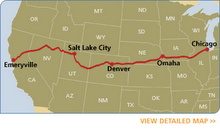
As part of my research, I'll be traveling by train from Oakland to New York City, following the path of those porters from years ago. This trip will include a visit to the A. Philip Randolph Museum in Chicago. Along the way, I'll be sharing with you what I learn and experience. Thank you for coming along.

Tuesday, August 19, 2008

New York State of Mind


My first day in New York it rained -- a steady drizzle that lasted all day. Just as well...I had finally gotten my copy of that last of Harry Potter and intended to read it all day (and night). Nothing is better than reading a book on a rainy day. Besides I like the sound of cars driving through standing water and the soft humid air.
I am happy that there are still books for young people to get lost in, just as I did when I was young and my mother took my sister and me to the library. I remember losing all track of time in the school library when I was in fifth grade. We had moved across the country and my only friends were books then. Besides I needed a break from my own mind, my thoughts, my stories, decisions, potential decisions, everything unfiltered, unfocused, undecided. My story is still taking shape. I can leave it behind for a little while.
For the remainder of the week, I'd spend time at the Schomberg, marking time on the subway and walking the streets of Harlem. Still deciding on the setting of the novel -- Chicago or New York. I still had time to decide.

Sunday, January 27, 2008

Arriving in New York

I spend most of the next day and evening looking out on a rainy landscape. The rain falls in steady consistency that is comforting. I sit in my little roomette. A part of me lamenting leaving Chicago, another part excited about New York and yet another part of me, thinking ahead, knowing that this is the last destination. In just a few days, I'll be going home, armed with more information than I know what to do with yet and knowing I need more, I'll need more and I don't even know what I'll need. I think I should have planned to stay in Chicago longer. What use is New York to me now? But do I really want to change the setting of the novel? Is this really the direction to which I want to move? I don't know. I don't have to decide now, do I? I am still gestating. New York. My stay in New York will tell me all that I need to know.

The train ride is longer. It seems that we stop at far more major cities than I had on either the Oakland-Denver or Denver/Chicago legs: Indianapolis, Cincinnati, D.C., Baltimore, Philadelphia. I'm slightly nostalgic for open spaces, although the rain slows the cities down, quiets them, so I can take them in without feeling overwhelmed. Unfamiliar skylines are revealed and train stations, regardless of their location, feel more and more familiar to me. They are similar, not necessarily in style or architecture but in feeling. They've aged. They know they aren't the center of attention of anymore, yet, they are undeterred and determined to make themselves useful, no matter where they are, in the center of or on the outskirts of town, connected or separated from the other more modern versions of themselves. I remember that here in these cities is where we live and contrary to what the media would have us believe, life, vital and valuable, does take place in the space between Los Angeles and New York City.

We are over an hour late when I finally reach New York. The late hour and the remnants of the storm makes for a silent departure. Passengers disembark in silence, walking together but isolated towards the outside world. Grand Penn Station seems to be ensconced in scaffolding and mesh draping. As we finally find our way to the taxi stand, drizzle is falling softly around me. New York City greets me indifferently, as if the entire city has much better things to do than acknowledge my arrival (which, of course, it does). Cars drive by, cutting a path through puddles of water. People walk by, mostly as if I am invisible. The bright neon lights from Madison Square Garden seems rude and gaudy, overly large and self-important. Lights are everywhere, artificially extending daylight or competing with it; I'm not sure which. Finally, its my turn; I'm in a cab and making my way to Brooklyn, where I'll be staying.

Sunday, October 28, 2007

To New York


My uncle drops me off at Union Station and its back to the dungeons for me. (Why are all train stations in major metropolitan areas named Union Station?) It takes me a while to navigate the twisting bowels of the train station, which I realize is now a Frankensteinian labyrinth of the older train tracks, the Metra and the city's older system. Unlike the architecture above ground, this is an uneasy design of old and new. The new is glistening modern, like an underground mall, while the old is cold marble, with towering columns and intricately carved ceilings, a hiccup in time where hobos still slept on wooden benches waiting for a free ride to somewhere more prosperous. These changes are abrupt, patched together so that I walk from one setting to the next, like a time machine.

Luckily for me, Amtrak has a lounge available where I wait, eat what remains of my Chicago-style pizza, call my sister and watch the conclusion of Flight Plan, with Jodi Foster and I wonder if it’s the train company's not-so subtle way of discouraging air travel. When I finally board the Cardinal for New York, its evening and the dank yellowing lights are even less illuminating than when I arrived. I've reached that funny place that we all reach when we travel, when you know that the end is coming soon. Like reaching a certain age and you realize while there is a great deal of the journey left but more is behind you than ahead of you.

I've enjoyed train travel much more than I thought I would. I think a little about what I will write about Chicago one day and about when I will return. Mostly I hope I will do justice to this city and its people. I had this idea in my head and now it’s been erased and I have to, in some ways, start again. It’s okay because I haven't really started yet and this is what the trip was for -- discovery.

We pull out of the city into the countryside. The sights become less urban soon and grayer and darker. It starts to rain. Dribbling raindrops on the window of my roomette and far-off flashes of lightning punctuate the thunder. It’s been a long time since I've seen storms like this one. Always liked the sound of raindrops on windows, it easily puts me to sleep.

Sunday, October 21, 2007

Winding Down the Windy City


My last day in Chicago and I realize that I will miss it. I get up early; though, I still feel disappointed in myself and my feet still hurt, I want to be out and walking the streets and I love cities, like New York and San Francisco, that seemed to be made for walking. I've always loved the early mornings because its the time when you believe that all those things you plan to do are really going to get done and before you realize you were just kidding yourself. I check out and scout out the location of Garrett's for some caramel-cheese popcorn I had promised myself I'd send to my friends in Colorado.

I walk into the bookstore I had passed the night before, which had the air of frat house on Sunday morning. I expected to see an emptied keg, discarded shoes and other debris lying across the bookshelves, instead it was the remnants of streamers, posters, balloons and candy wrappers being picked up by clerks who dragged themselves about as if recovering from a hangover. Three young girls, mostly identically, sat in a row at the counter of the coffee shop; their auburn heads bent at 45 degree angle, eyes downturned towards the latest addition of Harry Potter. I nodded. How could I forget?

I need a little time to myself. I have a date scheduled with my uncles -- uncles I don't know very well. Uncles, I don't know very well, at all. They are my father's half-brothers, born after my grandfather (a man I knew not at all) and my grandmother split up. They had grown up in Chicago, away from my father and his brothers and had only discovered each other after my grandfather's death. This was no deliberate subterfuge on anyone's part, just the result of distance, income and resentment, I think.
I am surprised when I see them later to see how much they resemble my father and my uncles, (the ones I grew up with) -- not just in looks -- (short statures, light almond colored skin and dark hair with a tendency to curl, if they still had it) but in manner: the way they laughed (which they did loudly and from their bellies) the way they spoke (with the same cadences and gestures) and what they spoke about(politics and race). The experience of sitting with them, of talking with them is like being in a house of mirrors, seeing distorted and skewed images of the familiar. I see my father in them and my uncles, but also my cousins, my sister and me and I realize that I was really seeing my grandfather. I wondered about my grandfather, a man I had only seen twice in my life and how much of him was in me. I try to lift those traits we have in common and create a picture of him, this man I never knew, except through my father's and my uncles' stories. So I asked them about him. Their answers, I think, were vague and unsatisfactory, as if they were protecting him or me. Or maybe, because they don't know him either. Maybe it is too intimate a question.

I find myself changing the subject and asking about Chicago. What was it like to grow up there? How has it changed? How is it different or special? Their answers don't surprise. They are proud of the city, proud of its history but frustrated by its racism and politics. As I listened to them argue, first with each other and then with me about various topics-- Harold Washington, economics, immigration, Oprah -- I realized that my story is here. The novel that I intend to write needed to be set in this city. It’s hard to say why but life does happen between the right and the left coasts, one even I failed to fully appreciate and I think I should know better. There was a history here that I need to know and part of it is my own.

My uncles escorted me around various parts of Chicago, including their Walk of Fame and the tomb of Stephen A. Douglass, president of the Confederacy. (Yes, honey, THAT Confederacy!) It was over quickly and I had another train to catch but I could leave Chicago, with a sense of satisfaction, knowing that I was coming back.

Sunday, October 14, 2007

Getting Home Blues (for Betty)


Getting back to the hotel took up the rest of the day. My feet were swollen; I was hungry, hurting in body and spirit. When I returned to my room, I simply put my feet up and my head down. The trip wasn't quite over yet, but I was leaving the next night on the train for New York without getting what I came for; so, for all intents and purposes, it might as well be.

A friend of my sister's, who lives in Chicago, came by and showed me around the city. Her parents grew up here. We drove, not around the Magnificent Mile, but to Bronzeville into neighborhoods where redevelopment was taking place. My tour guide pointed out the changes being made in the various neighborhoods and how gentrification was pricing out even middle-class people, like her. Chicago, again, reminded me of St. Louis, where I was born and my parents were born -- crumbling stone buildings, next to empty overgrown lots and trees dying without grace or growing without attention. Some of these now had been bought and remodeled. Stripped of stonework and wrought-iron, some looked embarrassed, as if they realized they were being made over into something that they were not. In-between, new growth, new buildings, some mimicking their older neighbors, like awkward younger siblings. Their lack of wisdom and experience was painfully obvious. Other times, buildings were restored, as close as they could be to their original appearance and then I could see the neighborhoods that became home to hundreds of black folks, escaping the oppression of southern racism.

We stopped to attend the gallery opening of a friend of a friend, Rosalind McGary at the Steelelife Gallery. The gallery is on the second floor in a small loft-like setting -- wood floors and exposed brick, much like you would expect from a artist-owned space. Rosalind's work is tremendously detailed and meditative. Their power seems to be in their ability to convey both movement and stillness simultaneously. In looking at them, I find my restlessness and my frustration waning. From a distance, her work is deceptively simple, just an interplay of texture and lines; even the mediums upon which she chooses to paint, wood mostly, add these layers of texture and depth. Then you step up to them and you see that in some of these paintings, these patterns have been created by the tiniest dot of paint, each one painstakingly placed to create this mosaic effect. So when you step up to it, the effect is three-dimensional, as if this image is floating off the surface and reaching out to you. The ethereal becomes real. I was a little stunned, both by the effect and the work that I realized went into each piece. I asked Rosalind how long it took her to do one of those paintings. She told me, "I try not to think about it. Depending on the piece, a year or more." Suddenly, I felt a little ashamed of myself. My little setback was nothing compared to the time and commitment she had made to a single painting, even the commitment to her vision of her work. Surely it would be easier to do it another way, but she doesn't.

That is the way it is with all things I think. The BSCP spent ten years, a decade, working to get recognized as a union and that seems like such a long time, when giving up seems so much easier and sometimes, it seems sensible and responsible. That's how treacherous our minds can be. When our lives tells us that our commitment to the truth is an indulgence, a luxury that we can't afford and we believe it, we lose.

Now I was never going to give up but I often wonder why I bother, especially when the rewards seems so out-of-reach. The writing I do, because it requires research, because it is a novel, occurs in a vacuum. I am alone there, in the world created in my own head and though I'd like to invite people in, I can't. Not yet. Its too fragile. I'm the guide and I don't know my way. Yet.

I am really reminded of this when later, after some famous Chicago-style pizza, we pass a bookstore, full of people, streaming out the door with their excitement spilling into the street. Harry Potter and the Deadly Hallows will be released at midnight. Say what you will about commercialism, but that woman spent over a year on public assistance (British version), writing in a cafe, stretching out her cups of coffee and writing her story. Her setbacks, far greater than mine, and the list of reasons to stop far longer than the list to go on. She didn't.

Wednesday, August 15, 2007

Explaining the Blues


(Explaining the Blues – Ma Rainey) Before I even began my trip a number of things were running through my mind -- typical for a writer who is still gestating a novel to digest and regurgitate ideas and images endlessly to see what they are made of. On that platform, for the next hour, the only thing I had to chew on was my own thoughts. I listened to and thought about the blues.

In Blues People, Leroy Jones (aka Amiri Baraka) writes that
the blues, had, and still has, a certain weight in the psyches of its inventor;
and when writing about Richard Wright’s Black Boy, Ralph Ellison wrote that
the specific folk-art form which helped shape the writer’s attitude towards his life …and embodied…quality and tone of his autobiography was the Negro blues,
but, in truth, the blues are all black folks’ autobiography.

I mean, I’m not saying anything new when I say that the blues are the definitive American music and that jazz and rock have their blues in their blood. So when I downloaded or recorded over 200 songs, blues and jazz, I did so because I wanted a soundtrack that was older than my own. The soundtrack of my life features The Jackson Five, Marvin Gaye, Minnie Ripperton, Hall and Oates, Earth, Wind & Fire, Stevie Wonder, Chaka Khan with Rufus, Cameo, Prince, and (remodeled) Michael Jackson, ad nauseum. These days, it’s more about Miles than I care to admit but, in my mind, the soundtrack of this trip included Ma Rainey, Bessie Smith, Memphis Millie and a whole list of anonymous singers, guitar, banjo and piano players who had travelled by train or by car from the South to the cities of New York, Chicago, St. Louis, Oakland, Los Angeles. The stories of the folks I want to write about, the stories of what they left and what they found were in those songs. It seemed to me if I was retracing their steps, as best as I could, I should do so with those same stories in my ears. (Counting the Blues – Ma Rainey)

Ralph Ellison also wrote that
the blues is an impulse to keep the painful details and episodes of a brutal experience alive in one’s aching consciousness, to finger its jagged grain, and to transcend it, not by the consolation of philosophy but by squeezing from it a near-tragic, near-comic lyricism.
In my African American literature course, I discuss with my students a literary concept called a blues ethos or blues aesthetic, which is a way of looking at the world that is grounded in the black experience – or the way black folks look at the world -- and how that way of looking at the world, permeates much more than music. The best example of that that I can think of is watching Richard Pryor’s performance in Live on the Sunset Strip. When the man talks about setting himself on fire and you want to laugh and cry at the same time, that is the blues, creating art of pain.

(Non-sequitar – This is precisely what most of these comedians who admired Richard Pryor don’t understand – the ability to make the autobiographical experience into a universal one, to explore its pathos and its absurdity and all their complexity rather than targeting the easy laugh. They lack either the life experience or the emotionally maturity ~Copyrighting the n-word, chile please~ to create blues and therefore, genius.)

Also embodied in that blues ethos is an ability to recognize irony and embrace contradiction. The story of Pullman porters is just like that. Somehow, in that car, they were both master and servant and their survival depended upon understanding that. The irony of being, in many ways, the one of the best professions available and still being paid far less than your peers, subject to random acts of humiliation and pettiness, yet signifying all that is elegant and civilized, is innate to this story and unfortunately not uncommon.

Leroy Jones also wrote …
that the weight of the blues for the slave…differs radically the weight of that same music in the psyches of most contemporary Negroes.
Jones concludes that
the one peculiar referent to the drastic change in the Negro from slavery to “citizenship” was his music.
Music marks the period in which the African ceases to be African and becomes an American – that you are no longer going home and that; indeed, there is no home to go to. Recognizing that this place, crazy as it is, IS your home and your destiny lies with it --- Honey, that would have given me the blues, too.

(Non-sequitar – Viewed this way doesn’t it seem disturbingly like an abusive relationship? Just a thought.)

Blues aren’t entirely about politics of, for that matter, tragedy. In the blues is the possibility, the hope of (if not the actuality) of triumph, redemption. So it was with my journey, when I finally get downtown. (Downtown Blues – Frank Stokes)

Monday, August 6, 2007

Chicago Blues Shuffle, p. 3


(Whatta You Gonna Do? – Louis Armstrong) How could I screw this up? I planned this entire trip just to get here. How did I miss this? Why didn’t I call? Because I had been checking the website.

Now I was certain that this was a mistake. Obviously, the heat and the lack of food had diminished my hearing, so I called back (If anyone is recalling what my dad said about insanity, just shut up). I get the same message. I don’t know whether I should cry or bitch but since I am facing certain dehydration, I elect bitch.

So I called my friend – in New York because I figured she was at home, at a computer and maybe a sympathetic ear. Thankfully, she answers the phone. She patiently listens to me wail the blues. I ask her to check the website because maybe I made a mistake. I thought I knew the dates when the museum was open. I feel some vindication when she tells me that nowhere on the site does it mention that the museum will be closed; (she even called) however, this small comfort was doused when she asked why I didn’t call. (Don’t Explain – Billie Holiday)

Pick a reason -- I assumed (erroneously) that the website information was current. I lived out-of-state and I was cheap. A telephone call seemed obsessive. I’m shy. (Arrgh) Regardless, I was still hoping that I could salvage this excursion. I was going to go to the museum anyway. (Look, I still had to get back to the Metra station.) With any luck, (though I don’t know why I’d begin to have any now) someone might be around. I could leave a note and maybe get a contact as a result. Also note that the entire time that this exchange is taking place, I haven’t stopped walking. I still don’t see anything remotely looking like Maryland Avenue, so I give my girl the number of the nearest address and she uses MapQuest to get directions. She tells me that I have over a mile to go to get there.

I was hungry, hurting and lost. Worse, I needed to go to the bathroom. (Baby, Please Don’t Go – Big Joe Williams) I pass the Gwendolyn Brooks Academy and though I was in too much pain to rejoice in signs, I’m glad to see it.(Gwendolyn Brooks Academy is also the former site of the public school built by George Pullman in 1915.)

I first read Gwendolyn Brooks at U.C. Berkeley in a class with the great Barbara Christian as my professor – a course that introduced me to many other writers. Most of my life, I knew very little about black writers, less about black women writers. I suppose the first inkling I had had was when The Color Purple (the movie) generated so much controversy. I read The Bluest Eye for the first time as a senior in high school. My parents had taken me to see A Soldier’s Play, I suppose, when I was in junior high. After all of those experiences, I lay awake in my bed, replaying words and scenes in my head, feeling kinship to these characters, maybe more than the authors. Their lives, maybe their interior lives more than their surroundings, echoed mine more than the cartoony images I saw on television. They were complex and contradictory, the way I knew myself to be, yet felt wasn’t allowed.

(Nobody’s Blues but Mine – Bessie Smith) Most of my adult life I spent doubting my ability to create stories that combine emotional honesty and art, simply because I was afraid to fail. Completing my first novel was a triumph over the fear that dogs me. I also know I’ll face those fears all over again as I create this novel. This wild excursion might be a metaphor for that creative process. Don’t we always begin with enthusiasm and a plan and find ourselves sidetracked and taking unexpected detours, always struggling to get back to that original vision… or maybe it’s just me.

I had finally gotten to the Metra Station and turned onto Cottage Grove. I’m at 111th and I have to get to 104th. I was almost there. I pass this construction site, unidentified but I feel certain that it must be the former site of the Pullman factory, being torn down for development. There are no signs, indicating what it was or what it will become. Even looking at the maps, it is difficult to identify the specific building I was passing. Only a few more blocks, my feet were swollen and I was dehydrated, I distracted myself by looking at the housing, I’m sure George Pullman built. How would he feel -- seeing black folks in the utopian community he tried to build and watching the empire he built being slowly dismantled until all that is left is the name he gave it? (Lord, if that would only happen to Donald Trump. Kidding…I’m kidding, sort of).

After a few blocks, I approach the building and my minute hopes sink when I see an empty parking lot. The building three stories tall, surrounded by a high wrought iron fence, looks empty and lonely. The windows, though, uncovered are darkened. I can’t even get close enough to peek through a window or slip my card under the door or in a mailbox slot. Or go to the bathroom. I take pictures. It’s all I can do.
It’s been almost four hours since I left the hotel. Over a week since I left California and it appears that I’ll return to both empty-handed. I leave after only a few minutes and begin the pilgrimage back to the station, trying not to think about my feet and trying not to feel humiliated. (This Bitter Earth – Dinah Washington)

It would take me another hour to get back. The 111th/Pullman station was a local, so several trains passed by without stopping. The station, itself, had neither agent nor bathroom. Mostly it was a shack and a platform. From there, I had a panoramic view of the world that was and is Pullman, re-inventing itself. It crossed my mind to walk to the 115th, where I began but my feet couldn’t take it, so mostly I sat, listening to my iPod and contemplating the blues.


DailyLit: What I'm Reading Now

Copyright

© 2008 L. Rebecca Harris